





Behind the opera: an interview

We spoke to Richard Studer (Director) and Jonathan Lyness (Conductor) about this year’s Opera Project season which opens tomorrow evening. For their tenth year at TFT, they present Tchaikovsky’s Eugene Onegin.

Why did you choose to stage Eugene Onegin this year?

RICHARD: Well, on a personal level, because I’ve always loved the piece. Tchaikovsky’s music is incredible – it’s Russian music but with a real European influence. It’s lyrical and melodic but has a Slavic chromaticism. You could describe it as Jane Austen meets Pushkin, but with a slightly dark side! There’s a real depth to the characters and a sense of Russian darkness.
In terms of choosing Onegin for this year’s Tobacco Factory season…over the years, we’ve done the Italian dramatic repertoire big time. So it felt right to branch out into new repertoire, by presenting our first Russian piece.

What do you think it is about Eugene Onegin that sets it apart from the rest?

RICHARD: It is a wonderful opera on so many levels. It’s accessible whether you’re new to opera, to Onegin or you’re an experienced old hand. And it’s Tchaikovsky’s music that does that; strong drama and melody is central to his style and the music has recognisability to it. Of course Tchaikovsky wrote the very famous music to Swan Lake and his music appears in mainstream circles from French and Saunders to TV adverts!

What have been some of the challenges that you have encountered in the staging of Eugene Onegin?

RICHARD: The hardest challenge has been negotiating our way around the large ballroom scenes that are part of Onegin’s story. And we’ve done this in a way that enables us to focus on the intimacy of the relationships of the principal characters.

Can you tell us a little about your approach to the design of the opera?

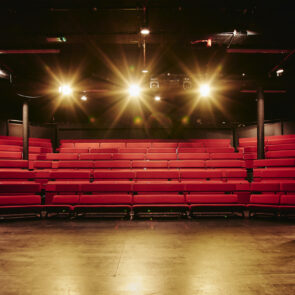
RICHARD: Basically, we use the Tobacco Factory as an abstract space to present a platform for the opera in seven scenes. The simplicity of the set enables us to switch seamlessly between those scenes in the country and the interior scenes. The design is symbolic, with an abstract overlay of lighting which creates the mood and suggestion of the different settings. Costume on the other hand is very naturalistic, and of the period.

What’s your favourite moment in the opera?

RICHARD: Without a doubt, it’s the opening of the score – these rolling melodies which give the suggestion of everything building up. The opera begins from stillness, with a sense of the heaviness and tedium of life in an isolated country estate. And that stillness really serves to create a great contrast when there’s this explosion of drama within the plot. It comes from nothing and that just intensifies the drama.

What makes Tchaikovsky’s music special and how does it transfer to an intimate venue like the Tobacco Factory Theatre?

JON: It will transfer brilliantly. The key thing about Tchaikovsky, and Onegin in particular, is that it’s a very intimate story. You get very involved with the heroine, Tatyana and the intimate relationship between Lensky and Olga. Emotionally, it’s not all about great declarations of love and hate. It deals with more complicated human emotions and relationships. On a grand opera stage it’s not always as easy to connect with those types of emotions and characters but at the Tobacco Factory you’re in such close proximity that you’re really entwined with the story.
Musically, Tchaikovsky is difficult to pigeon hole. As Richard said, Tchaikovsky is one of the more European influenced Russian composers. A bit like Rachmaninov, very emotional, very passionate and his music very much wears its heart on its sleeve.

This is the tenth year Opera Project has come to the Tobacco Factory Theatre, what have been some of your highlights and what keeps you coming back?

JON: Tobacco Factory Theatre is a venue we feel absolutely passionately about and very at home in. It’s a very comforting venue. Not that it doesn’t constantly challenge us, but we feel so welcomed. The audience are a really eclectic mix with a lot more theatre goers than you might see at other opera venues. When we’re going full throttle with the opera in a performance, it feels like the TFT audience is really there with you, soaking it up. And I think it becomes unified by this shared experience between performers and audience. You can feel that atmosphere, that the audience really ‘get it’. And that’s a fantastic feeling.
I’ve got lots of highlights. Every piece we’ve done really. One piece was very special to me, and that’s The Turn of the Screw, which we did in 2006. The Tobacco Factory was such a perfect setting – very atmospheric and quite terrifying to do that piece here. But we’ve loved all our years here, and long may it continue!
RICHARD: I’d have to say the audience as well. They’re so diverse and so appreciative at all levels. I’d also agree that Turn of the Screw was a highlight – to present such a psychologically challenging piece in a space that was so perfectly suited was a great experience.
The other thing about being at the Tobacco Factory is that we’ve watched the development - of the audience and the theatre itself – and it’s been a privilege to have been involved in the space from very near the start. It’s one of the most enjoyable venues to perform in; and a combination of professionalism and family.

Find out more about Eugene Onegin here.